
How Much Protein Should You Eat at Breakfast?
Short answer: Aim for about 25 to 30 grams of protein at breakfast. That's roughly what your body needs at one meal to build and repair muscle well. Most Americans eat far less in the morning and save most of their protein for dinner.
Key Terms
- Protein: the nutrient your body uses to build and repair muscle, skin, bones and enzymes. It comes from foods like eggs, dairy, fish, meat, beans and tofu.
- Muscle protein synthesis: the process your body uses to build new muscle. Eating protein switches it on for a few hours after a meal.
- Protein distribution: how your day's protein is spread across your meals.
How Much Protein Do Most People Eat at Breakfast?
Usually not much. U.S. government survey data shows that almost three-quarters of the protein American adults eat comes at lunch and dinner. Breakfast and snacks split what's left.[1]
A typical bowl of cereal with milk has about 10 grams of protein. A plain bagel or a piece of toast with jam has less than that.
Why Does Protein at Breakfast Matter?
Your body builds muscle better from several solid servings of protein than from one large serving at night. In one study, adults ate the same 90 grams of protein a day in two ways:
| Diet | Breakfast | Lunch | Dinner |
|---|---|---|---|
| Even | 30 g | 30 g | 30 g |
| Skewed toward dinner | 10 g | 15 g | 65 g |
Over 24 hours, muscle building was about 25% higher on the even diet.[2] The total protein was the same. Only the timing changed, and breakfast was where the even diet made up the most ground.
Protein also keeps you full longer than carbohydrates or fat. A breakfast with enough protein can make it easier to get to lunch without snacking.[3]
Does Breakfast Protein Matter More After 50?
Yes. As you age, your muscles respond less to small amounts of protein. A group of experts in nutrition and aging recommends 25 to 30 grams of protein per meal for older adults, and 1.0 to 1.2 grams per kilogram of body weight per day. That's about 0.45 to 0.55 grams per pound.[4]
For a 160-pound person, that's about 73 to 87 grams a day. A breakfast with 25 grams covers about a third of it before 9 a.m. For more on daily targets, see How Much Protein Do You Need to Lose Weight?
What Does a 25-Gram Breakfast Look Like?
You don't need a recipe. These combinations each reach about 25 grams or more:
| Breakfast | About how much protein |
|---|---|
| 2 eggs + 6 oz plain Greek yogurt | 29 g |
| 1 cup cottage cheese + fruit | 25 g |
| 3 oz smoked salmon + 1 egg on whole-grain toast | 26 g |
| Tofu scramble (about 6 oz firm tofu) with vegetables | 25 g |
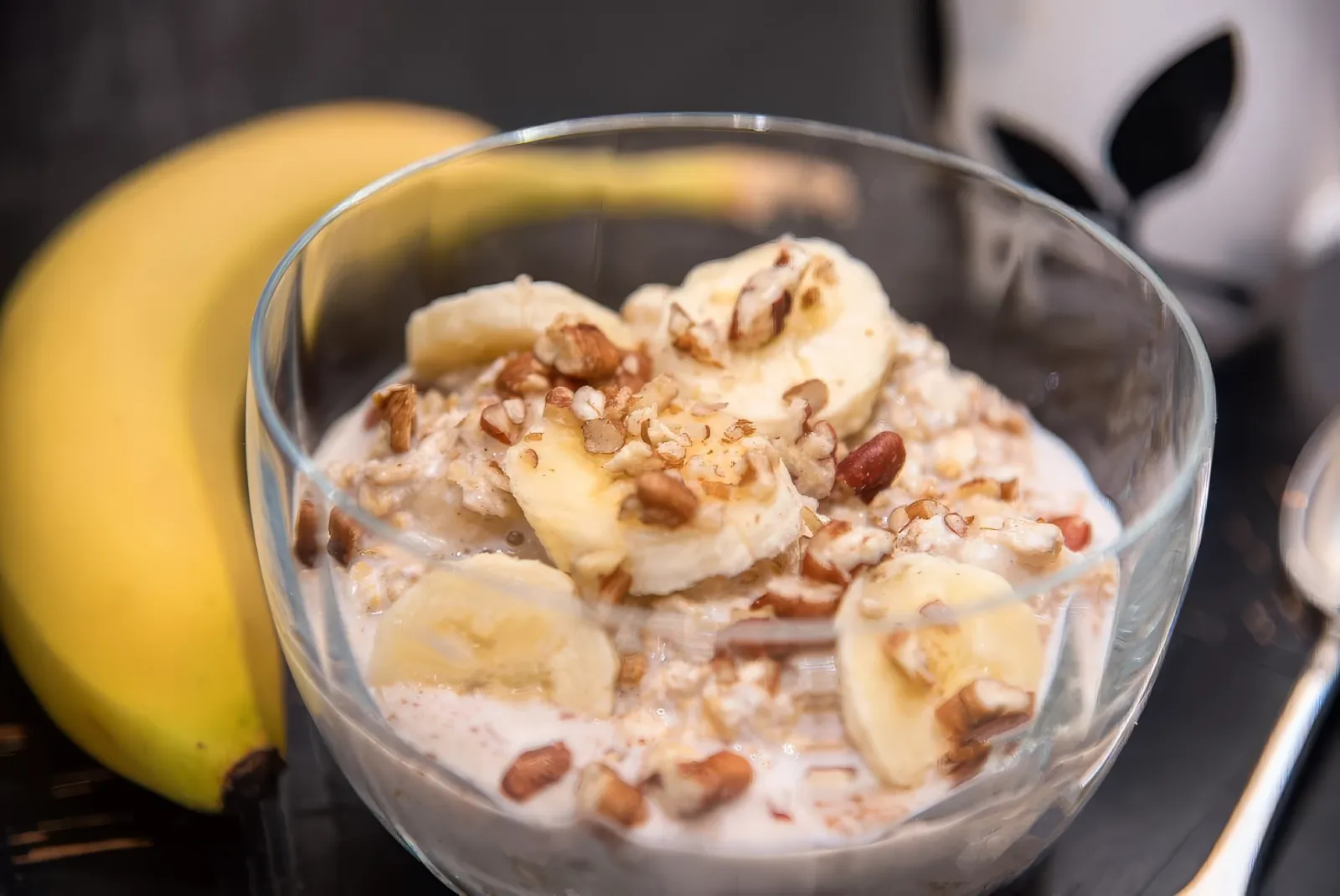
| Oatmeal made with 1 cup milk + 2 tbsp peanut butter + a hard-boiled egg | 26 g |
Amounts are rounded, from USDA FoodData Central. Tofu varies by brand, so check the label.
How Can You Add Protein Without Changing Your Whole Breakfast?
- Add one protein food to what you already eat. Toast becomes toast with eggs. Fruit becomes fruit with cottage cheese.
- Swap regular yogurt for Greek yogurt. It has about twice the protein.
- Make oatmeal with milk instead of water, and stir in nut butter or chia seeds.
- Keep grab-and-go options in the fridge, like hard-boiled eggs or single-serve cottage cheese.
- Eat leftovers. Last night's salmon or chicken works at breakfast too.
Frequently Asked Questions
How much protein should I eat at breakfast?
About 25 to 30 grams. That's enough to switch on muscle building and to keep you full until lunch.
Is it bad to eat most of your protein at dinner?
It isn't harmful, but it's less efficient. In one study, spreading the same protein evenly over three meals led to about 25% more muscle building over 24 hours than eating most of it at dinner.
What is the easiest high-protein breakfast?
Two eggs with Greek yogurt gives you about 29 grams with almost no cooking. Cottage cheese with fruit gives you about 25 grams with none.
Do older adults need more protein at breakfast?
Yes. Experts recommend 25 to 30 grams per meal for older adults, because aging muscles respond less to small amounts of protein.
Can I get 25 grams of protein at breakfast without eggs or dairy?
Yes. A tofu scramble made with about 6 ounces of firm tofu has roughly 25 grams. You can also add beans or a plant-based protein yogurt.
The Bottom Line
Most people eat too little protein in the morning and too much at night. Aiming for 25 to 30 grams at breakfast helps your body build muscle, keeps you full and matters more as you get older. At 5 squares, breakfast is one of the five chef-prepared meals delivered to your door each night, so it's ready when you wake up.
See the MenuThis article is general information, not medical advice.
Sources
- U.S. Department of Agriculture, Food Surveys Research Group. Protein Intake of Adults: What We Eat in America, NHANES 2015–2016. PubMed ↩
- Mamerow et al. Dietary protein distribution positively influences 24-h muscle protein synthesis in healthy adults. Journal of Nutrition. 2014. PMC4018950 ↩
- Leidy et al. The role of protein in weight loss and maintenance. American Journal of Clinical Nutrition. 2015. doi:10.3945/ajcn.114.084038 ↩
- Bauer et al. Evidence-based recommendations for optimal dietary protein intake in older people: a position paper from the PROT-AGE Study Group. Journal of the American Medical Directors Association. 2013. doi:10.1016/j.jamda.2013.05.021 ↩