How Much Protein Do You Actually Need to Lose Weight?
If you want to lose fat and keep your muscle, aim for about half to three-quarters of a gram of protein per pound of body weight each day. For a 180-pound person, that's roughly 100 to 130 grams.
Research writes this as 1.2 to 1.6 grams per kilogram (g/kg). That's well above the official minimum of 0.8 g/kg, which was set for inactive adults who aren't trying to lose weight.
Key Terms
- g/kg: Grams of protein per kilogram of body weight. One kilogram is 2.2 pounds.
- Calorie deficit: Eating fewer calories than your body burns, which is how weight loss happens.
- Lean mass: Everything in your body that isn't fat, including muscle, bone, organs and water.
- Resistance training: Exercise where your muscles work against a load, like weights, bands or your own body weight.
- GLP-1 medications: Appetite-reducing drugs such as semaglutide (Ozempic, Wegovy) and tirzepatide (Mounjaro, Zepbound).
Why You Need More Protein When You're Eating Less
When you eat less than you burn, your body makes up the difference from its own stores. Some of that comes from muscle, especially when protein is low. Losing muscle leaves you weaker and lowers the calories you burn at rest, and the scale can't tell you it's happening.
More protein helps in three ways:
- It keeps you fuller than the same calories from carbs or fat.[1]
- It takes more energy to digest. Your body burns about 20 to 30 percent of protein's calories processing it, compared with 0 to 10 percent for carbs and fat.[2]
- It helps you keep muscle while your body burns fat.
What the Research Shows
A 2012 review of 24 diet studies found that when people ate the same calories, those eating more protein lost a little more fat and kept more muscle.[3] For people who lift weights, a 2018 review found the benefit of extra protein leveled off at around 1.6 g/kg for most people.[4] In 2025, four medical and nutrition groups proposed 1.2 to 1.6 g/kg for people losing weight, including those on GLP-1 medications.[5]
| Situation | Per kilogram | Per pound |
|---|---|---|
| Official minimum (RDA) | 0.8 g | 0.36 g |
| Losing weight | 1.2–1.6 g | 0.55–0.73 g |
| Losing weight and strength training | 1.6–2.2 g | 0.73–1 g |
| Losing weight on a GLP-1 | 1.2–1.6 g | 0.55–0.73 g |
How to Work Out Your Number
Multiply your weight in pounds by 0.55 for the low end and by 0.73 for the high end. For a 180-pound person, that's 180 × 0.55 = 99 grams and 180 × 0.73 = 131 grams, so about 100 to 130 grams a day.
| Body weight | Losing weight | With strength training |
|---|---|---|
| 150 lb | 80–110 g/day | 110–150 g/day |
| 180 lb | 100–130 g/day | 130–180 g/day |
| 200 lb | 110–145 g/day | 145–200 g/day |
If you have a lot of weight to lose, use your goal weight instead of your current weight. Someone at 260 pounds aiming for 190 would get a target of about 104 to 138 grams instead of 143 to 190, which is easier to reach and still enough.
How to Hit Your Target
Aim for 25 to 40 grams of protein at each of three or four meals. Your body builds muscle better from several solid servings than from one big one, and most people eat too little protein at breakfast and lunch.
| Food | Serving | Protein |
|---|---|---|
| Chicken breast, cooked | 4 oz | 35 g |
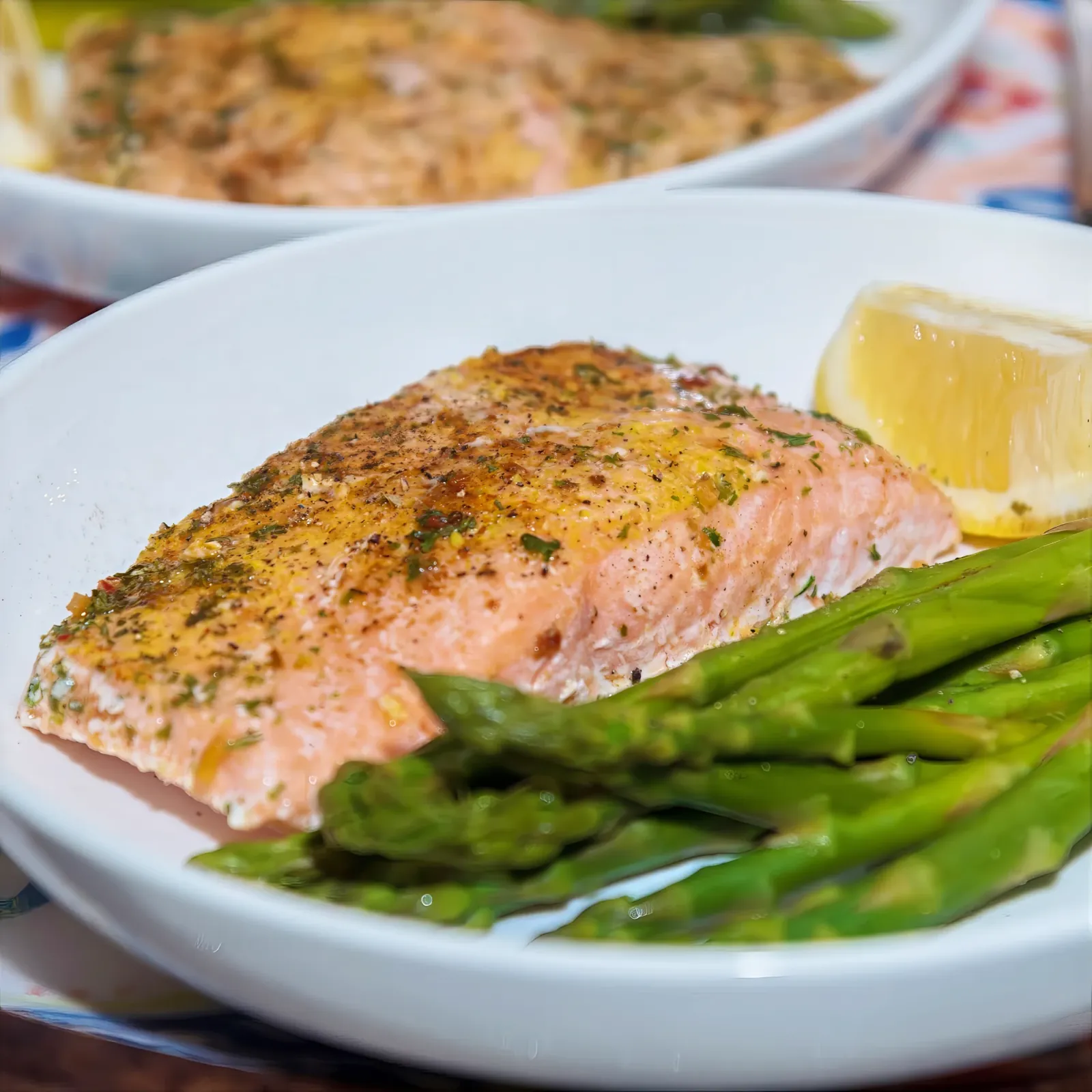
| Salmon, cooked | 4 oz | 25 g |
| Cottage cheese, low-fat | 1 cup | 25 g |
| Greek yogurt, plain nonfat | 1 cup | 23 g |
| Lentils, cooked | 1 cup | 18 g |
| Eggs | 2 large | 12 g |
| Protein powder (whey or plant-based) | 1 scoop | 20–25 g |
A 120-gram day could look like this: Greek yogurt and two eggs at breakfast (35 g), a chicken salad at lunch (35 g), cottage cheese as a snack (13 g) and salmon with lentils at dinner (40 g). If you eat mostly plants, combine beans, lentils, tofu and tempeh, and aim for the upper end of your range.
Strength Training, GLP-1s and Age
Strength training: Protein works best alongside two or three strength sessions a week. Lifting is what tells your body to keep its muscle.
GLP-1 medications: In clinical trials, roughly 25 to 40 percent of the weight people lost was lean mass, or about 2.5 to 4 pounds of every 10.[6][7] With a smaller appetite, eat the protein on your plate first, use shakes or yogurt when solid food is hard, and tell your doctor if you can't get near your target.
Over 60: Muscle responds less to protein with age, so aim for the upper end of the range, with 30 to 40 grams per meal.
Mistakes to Avoid
- Using "1 gram per pound" for everyone. That's the top of the range for people who lift, and more than many people with a lot of weight to lose need.
- Saving most of your protein for dinner. Spread it out.
- Guessing. Two tablespoons of peanut butter has only about 7 grams. Track for a few days to see where you stand.
- Ignoring your kidneys. Healthy adults handle up to about 2 g/kg, but if you have kidney disease, set your intake with your doctor or a dietitian.
The Bottom Line
- While losing weight, aim for about 0.55 to 0.73 grams per pound (1.2 to 1.6 g/kg) a day.
- If you have a lot to lose, base it on your goal weight.
- Spread it out: 25 to 40 grams per meal.
- Pair it with strength training two to three times a week.
- If you have kidney disease or another medical condition, check with your doctor first.
This article is general information, not medical advice.
Sources
- Leidy et al. The role of protein in weight loss and maintenance. American Journal of Clinical Nutrition. 2015. doi:10.3945/ajcn.114.084038 ↩
- Westerterp. Diet induced thermogenesis. Nutrition & Metabolism. 2004. doi:10.1186/1743-7075-1-5 ↩
- Wycherley et al. Effects of energy-restricted high-protein, low-fat compared with standard-protein, low-fat diets: a meta-analysis of randomized controlled trials. American Journal of Clinical Nutrition. 2012. doi:10.3945/ajcn.112.044321 ↩
- Morton et al. A systematic review, meta-analysis and meta-regression of the effect of protein supplementation on resistance training-induced gains in muscle mass and strength in healthy adults. British Journal of Sports Medicine. 2018. doi:10.1136/bjsports-2017-097608 ↩
- Mozaffarian et al. Nutritional priorities to support GLP-1 therapy for obesity: a joint Advisory from the American College of Lifestyle Medicine, the American Society for Nutrition, the Obesity Medicine Association, and The Obesity Society. American Journal of Clinical Nutrition. 2025. doi:10.1016/j.ajcnut.2025.04.023 ↩
- Wilding et al. Once-Weekly Semaglutide in Adults with Overweight or Obesity. New England Journal of Medicine. 2021. doi:10.1056/NEJMoa2032183 ↩
- Jastreboff et al. Tirzepatide Once Weekly for the Treatment of Obesity. New England Journal of Medicine. 2022. doi:10.1056/NEJMoa2206038 ↩