
Why Five Meals a Day Supports Weight Loss
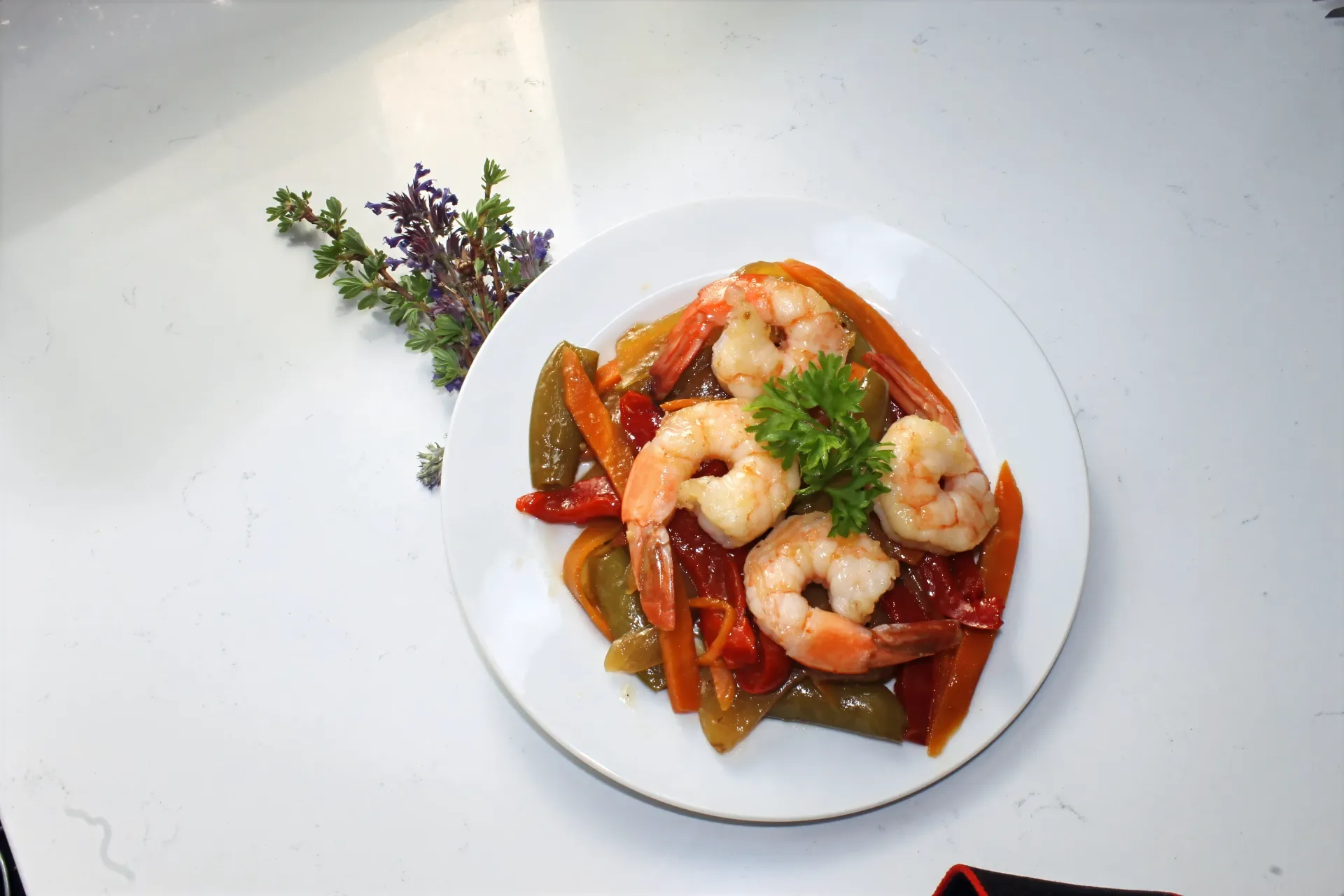
Eating five times a day won't speed up your metabolism on its own. What it does is make the habits behind fat loss easier to keep: protein at every meal, steadier hunger and fewer food decisions made on an empty stomach. Here's what the research shows.
Protein at Every Meal Keeps You Full
Protein is the most filling nutrient. In short-term studies it lowers ghrelin, the hormone that drives hunger, and raises the fullness hormones CCK and GLP-1. The effect is strongest when someone moves from a low protein intake to a moderate one.[1]
Five meals make it hard to under-eat protein. When each meal carries some, smaller portions still feel satisfying, and the gap before the next meal doesn't end in a raid on whatever is closest. Most 5 squares meals, snacks included, are built around a protein: chicken, fish, turkey, beef, eggs, or plant protein on the vegan plan.
Spreading Protein Out Protects Muscle
When you eat less, you want the weight you lose to come from fat, not muscle. How you spread protein through the day plays a part. In a 2014 study, eating about 30 grams of protein at each of three meals produced about 25% more muscle protein synthesis over 24 hours than eating the same total with most of it at dinner.[2]
A 2018 review in the Journal of the International Society of Sports Nutrition recommends about 0.4 grams of protein per kilogram of body weight per meal, across at least four meals, to make the most of it for building muscle.[3] And in a small trial of 30 overweight adults, the group eating about 35% of calories from protein over six meals a day kept more lean mass and burned more calories after meals during a calorie deficit than the groups eating the same protein in three meals or a typical lower-protein diet.[4]
Steadier Hunger Through the Day
Eating every two to three hours means you rarely reach the point where you're so hungry that portion control disappears. A position stand on meal frequency found that eating more often can help reduce hunger and improve appetite control.[5] In a trial of adults with prediabetes or type 2 diabetes, the same food eaten as six meals instead of three lowered hunger and the desire to eat.[6]
Total Calories Still Matter Most
Meal frequency is a tool, not a shortcut. When total calories are the same, studies comparing more meals with fewer find little difference in weight loss.[7] The energy your body spends digesting food follows how much you eat in a day, not how many times you eat it.[5]
Where five meals help is consistency. A daily range of 1,200 to 1,500 calories with 100 grams of protein or more is simpler to hold when the food is spread across five meals instead of three.
Structure Makes It a Habit
Once the five meals are planned, there are fewer chances to grab a high-calorie snack out of convenience or boredom. Knowing the next meal is coming in a couple of hours takes the urgency out of the afternoon. Over a few weeks, five meals becomes the default, and staying on track takes less willpower.
How 5 squares Puts It Together
Every 5 squares plan comes with five meals a day: breakfast, lunch, dinner and 2 snacks, cooked in our New Rochelle kitchen and delivered overnight, Sunday through Thursday. The planning is done, the portions are set, and the day's meals are already in the bag at your door. For more on the plan itself, read Eat More, Eat Clean: Why Five Smaller Meals Work and How Much Protein Do You Actually Need to Lose Weight?
Plans run 2 to 7 days a week and start at $57 a day for all five meals. To try it first, order 3 to 7 days with no commitment.
See the Signature Plan Start Your Order
Sources
- Leidy et al. The role of protein in weight loss and maintenance. American Journal of Clinical Nutrition. 2015. doi:10.3945/ajcn.114.084038 ↩
- Mamerow et al. Dietary Protein Distribution Positively Influences 24-h Muscle Protein Synthesis in Healthy Adults. Journal of Nutrition. 2014. doi:10.3945/jn.113.185280 ↩
- Schoenfeld and Aragon. How much protein can the body use in a single meal for muscle-building? Implications for daily protein distribution. Journal of the International Society of Sports Nutrition. 2018. doi:10.1186/s12970-018-0215-1 ↩
- Arciero et al. Increased protein intake and meal frequency reduces abdominal fat during energy balance and energy deficit. Obesity. 2013. doi:10.1002/oby.20296 ↩
- La Bounty et al. International Society of Sports Nutrition position stand: meal frequency. Journal of the International Society of Sports Nutrition. 2011. doi:10.1186/1550-2783-8-4 ↩
- Papakonstantinou et al. Effects of 6 vs 3 eucaloric meal patterns on glycaemic control and satiety in people with impaired glucose tolerance or overt type 2 diabetes: A randomized trial. Diabetes & Metabolism. 2018. doi:10.1016/j.diabet.2018.03.008 ↩
- Schoenfeld, Aragon and Krieger. Effects of meal frequency on weight loss and body composition: a meta-analysis. Nutrition Reviews. 2015. doi:10.1093/nutrit/nuu017 ↩