Soluble vs. Insoluble Fiber, Explained
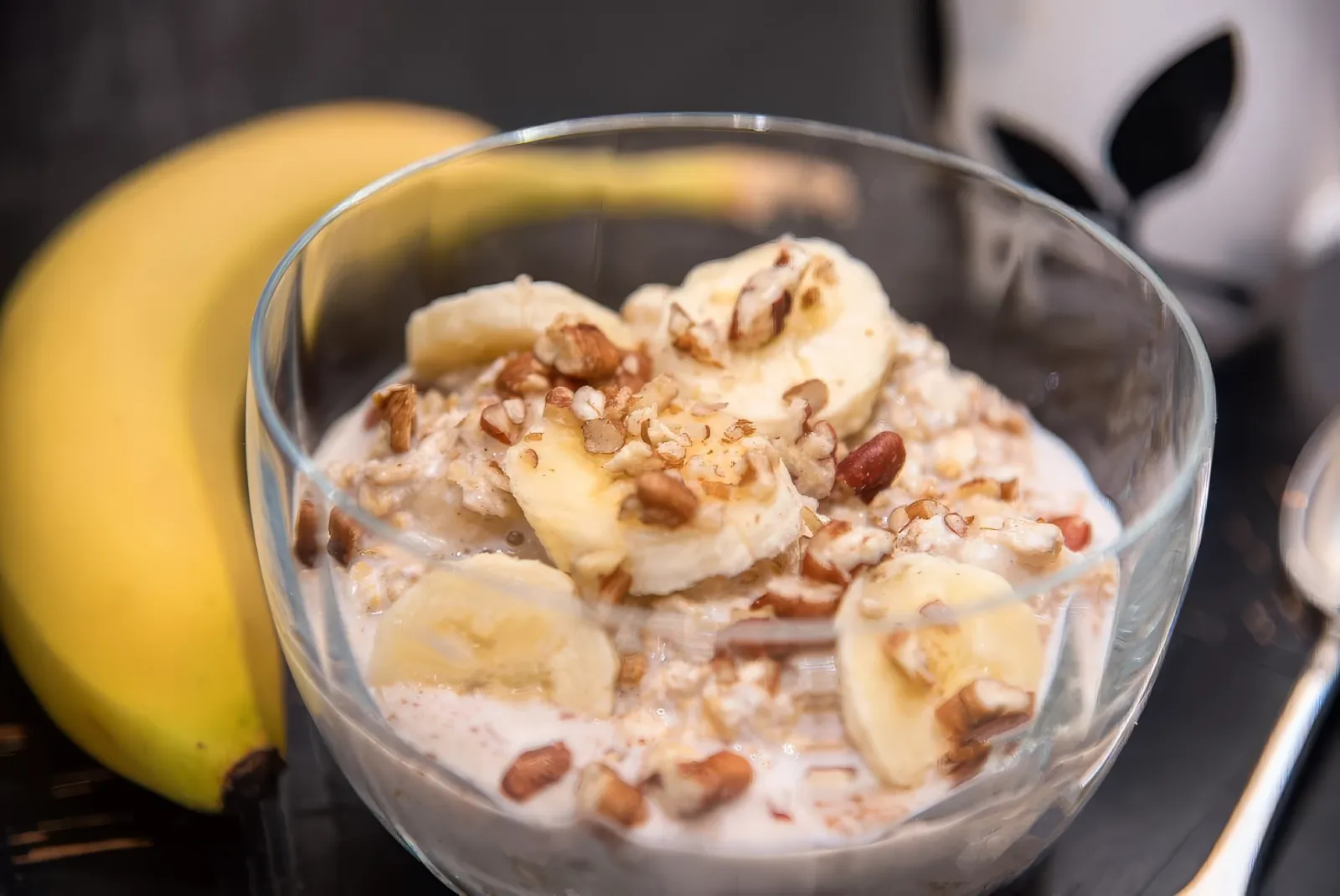
Fiber comes in two main kinds. Soluble fiber dissolves in water and turns into a gel, which slows digestion and helps lower cholesterol. Insoluble fiber doesn't dissolve. It adds bulk and keeps food moving through your gut.
Most plant foods contain some of each, and you need both. Here's what each one does and where to find it.
Key Terms
- Dietary fiber: The parts of plant foods (fruit, vegetables, grains, beans, nuts and seeds) that your body can't digest. It passes through your stomach and small intestine mostly intact.
- Soluble fiber: Fiber that dissolves in water. Some types thicken into a gel.
- Insoluble fiber: Fiber that doesn't dissolve. It holds on to water and adds bulk to stool.
- Gel-forming fiber: Soluble fiber that turns thick, like the fiber in oats or psyllium. Most of soluble fiber's benefits come from this gel.[1]
- Beta-glucan: The gel-forming fiber in oats and barley.
- Psyllium: A gel-forming fiber made from the husks of a plant's seeds, sold as a powder or capsule.
- LDL cholesterol: The "bad" cholesterol that can build up in your blood vessels.
What Soluble Fiber Does
When soluble fiber meets water in your gut, it thickens. That gel slows how quickly food leaves your stomach and how quickly sugar reaches your blood, so you stay full longer and your blood sugar rises more gently after a meal.[1]
The gel also traps some of the bile your liver makes from cholesterol and carries it out of the body. Your liver then pulls cholesterol from your blood to make more. A review of 28 trials found that 3 grams a day of oat beta-glucan lowered LDL cholesterol by about 10 points (0.25 mmol/L).[2] Two servings of oats or barley a day gets you close to that amount.
Not every soluble fiber forms a gel. Inulin, which is often added to high-fiber bars and drinks, dissolves but stays thin, so it doesn't help with cholesterol or blood sugar the same way.[1]
What Insoluble Fiber Does
Insoluble fiber travels through your gut mostly unchanged. It holds water and adds bulk, which makes stool softer and easier to pass. Coarse pieces, like the flakes in wheat bran, also nudge the wall of the gut to keep things moving. Finely ground bran works much less well.[1]
Psyllium is the exception that does both jobs. Its gel holds water, so it softens hard stool and firms up loose stool.[1]
Where to Find Each Kind
- Soluble: oats, barley, beans, lentils, peas, apples, pears, citrus fruit, carrots, chia and flax seeds, psyllium.
- Insoluble: wheat bran, whole wheat, brown rice, nuts, seeds, the skins of fruit and vegetables, leafy greens, cauliflower, green beans.
| Food | Serving | Total fiber |
|---|---|---|
| Lentils, cooked | 1 cup | 16 g |
| Black beans, cooked | 1 cup | 15 g |
| Chia seeds | 1 oz (about 2 tbsp) | 10 g |
| Raspberries | 1 cup | 8 g |
| Barley, cooked | 1 cup | 6 g |
| Pear, with skin | 1 medium | 6 g |
| Broccoli, cooked | 1 cup | 5 g |
| Apple, with skin | 1 medium | 4 g |
| Oatmeal, cooked | 1 cup | 4 g |
| Almonds | 1 oz (about 23) | 3.5 g |
Amounts are rounded, from USDA FoodData Central.
How Much You Need
The usual target is about 14 grams of fiber for every 1,000 calories you eat. That works out to 25 grams a day for women and 38 for men, or 21 and 30 grams after age 50, when calorie needs drop. Most Americans eat about 17 grams a day, and only about 1 in 20 people reach the target.[3]
You don't need to count the two kinds separately. If you eat a mix of beans, whole grains, fruit, vegetables, nuts and seeds, you'll get both. Oatmeal with raspberries at breakfast, an apple as a snack, a cup of lentils at lunch and broccoli with dinner add up to about 37 grams.
Tips for Eating More
- Go slowly. Add a few grams every few days to avoid gas and bloating.
- Drink more water. Fiber needs fluid to do its job, especially psyllium and bran.
- Eat the skins of apples, pears and potatoes.
- If you use a supplement, psyllium has the strongest evidence.[1] Take it with a full glass of water and a couple of hours apart from any medications.
- If you have a digestive condition such as IBS or Crohn's disease, check with your doctor before adding a lot of fiber.
For more on raising your intake safely, see Fibermaxxing: The Trend That Actually Holds Up.
The Bottom Line
- Soluble fiber forms a gel that keeps you full, steadies blood sugar and lowers LDL cholesterol. Oats, barley, beans and apples are good sources.
- Insoluble fiber adds bulk and keeps you regular. Whole grains, nuts and vegetable skins are good sources.
- Aim for 25 grams a day for women and 38 for men (21 and 30 after 50), from a mix of plant foods.
- Increase slowly and drink more water as you go.
This article is general information, not medical advice.
Sources
- McRorie and McKeown. Understanding the physics of functional fibers in the gastrointestinal tract: an evidence-based approach to resolving enduring misconceptions about insoluble and soluble fiber. Journal of the Academy of Nutrition and Dietetics. 2017. doi:10.1016/j.jand.2016.09.021 ↩
- Whitehead et al. Cholesterol-lowering effects of oat β-glucan: a meta-analysis of randomized controlled trials. American Journal of Clinical Nutrition. 2014. doi:10.3945/ajcn.114.086108 ↩
- Dahl and Stewart. Position of the Academy of Nutrition and Dietetics: health implications of dietary fiber. Journal of the Academy of Nutrition and Dietetics. 2015. doi:10.1016/j.jand.2015.09.003 ↩